Charlton "Chink" Ogden III
Covington, Louisiana Attorney

Covington Louisiana Attorney Charlton "Chink" Ogden

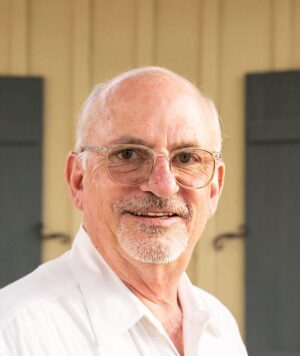
Charlton “Chink” Ogden III has been practicing law on the Louisiana Northshore since 2001, with his office in Covington. He earned his Juris Doctorate from Tulane University Law School in 1981 and spent fifteen years practicing civil litigation alongside his father, Charlton B. “Chuck” Ogden II, in New Orleans, where he became a partner in the firm. That background shaped everything about how he practices today: directly, honestly, and without unnecessary complexity. When you call Ogden Law, Chink answers. When you have a question, he explains it in plain English. That’s how it has always worked here.

A Covington Louisiana Attorney Who Knows Local Laws

Louisiana is a civil law state, which makes it genuinely different from every other state in the country. The succession process, the rules governing estate planning, forced heirship, usufruct, naked ownership, community property law: all of it flows from the Louisiana Civil Code, descended from the Napoleonic Code, not the English common law tradition that governs the other 49 states.

That distinction matters enormously in practice. When a spouse dies in Louisiana, the surviving spouse does not automatically inherit everything. Depending on whether property is classified as community or separate, and whether there’s a valid will, the outcome can look very different from what most people expect going in. When someone dies without a will here, Louisiana’s intestate succession rules determine who inherits, and the sequence of heirship follows the Civil Code, not common law assumptions. Forced heirship, which exists only in Louisiana, means that children age 23 or younger, or children of any age with a permanent disability, are legally entitled to a portion of the estate regardless of what a will says.

Chink has been a top Covington Louisiana attorney, working inside this system for more than twenty-five years. He knows the 22nd Judicial District Court in St. Tammany Parish well, understands the local Clerk of Court’s requirements, and has guided hundreds of Northshore families through successions and estate plans under Louisiana law. Whether a succession involves a small affidavit for an estate under $125,000, a testate succession where someone left a will, or an intestate succession where Louisiana law determines the heirs, he has handled it. That depth of local, Louisiana-specific experience is not something a national legal content site or an out-of-state attorney handling Louisiana matters occasionally can replicate.

Background and Credentials

Charlton B. Ogden III was born and raised in uptown New Orleans. He attended Tulane University Law School, receiving his Juris Doctorate in 1981, and was admitted to the Louisiana State Bar Association that same year. For 15 years, he practiced civil litigation at his father’s firm in New Orleans, where he became a partner. That background in civil litigation gave him a working command of the Louisiana Civil Code across multiple practice areas: estate planning, succession law, property disputes, contract matters, and general civil law.

He is, by his own count, a thirteenth-generation lawyer. Law is a family tradition that stretches back further than Louisiana statehood itself. He takes that history seriously, and it shapes how he approaches every client relationship.

Chink has been based in Covington for many years. His office is at 71206 Hendry Ave, and he serves clients throughout St. Tammany Parish, including Mandeville, Madisonville, Abita Springs, Slidell, and the surrounding Northshore communities.

experienced Covington Louisiana attorney
Experienced Covington Louisiana attorney, Charlton Ogden

What Clients Can Expect

Charlton answers the phone. Most law firms route calls through staff. At Ogden Law, you work directly with the attorney. Not a paralegal, not a junior associate. Charlton handles your matter personally from the first consultation through the close of representation. That direct access matters most when something comes up mid-succession or mid-estate plan and you need a real answer quickly.

He explains things in plain English. Louisiana legal terminology can be confusing. Usufruct, naked ownership, forced heirship, judgment of possession, succession representative: these are real concepts that affect real families, and they deserve plain-language explanation. Chink takes the time to make sure clients understand what is happening with their matter and why.

His fees are reasonable and transparent. There are no surprise charges at Ogden Law. Before any work begins, Charlton explains what the matter will cost and how fees are structured. He believes quality legal representation should be accessible to ordinary families on the Northshore, not just those with significant resources.

He is honest about your situation. Charlton will tell you what he thinks, even when it is not what you hoped to hear. If a contested succession is unlikely to go your way, he will say so. If a trust is not the right tool for your situation, he will tell you that too. Honest counsel is more valuable than optimistic counsel, and Chink has always operated that way.

His faith informs how he practices. Charlton is a longtime member of First Baptist Church of Covington, where he has served as an usher-greeter since 2011. He approaches his law practice with the same values he brings to that community: honesty, genuine care for the people in front of him, and a commitment to doing right by them. That is not marketing language. It is how he has practiced for more than forty years.

Common Situations Charlton Handles

Most clients come to Ogden Law in one of two situations. Either someone close to them has died and they are trying to figure out what comes next, or they are planning ahead and want to make sure their family is protected when the time comes.

On the succession side, the most common matters include opening a formal succession at the 22nd JDC for estates with real property, preparing small succession affidavits for qualifying estates under $125,000, guiding surviving spouses through the usufruct and naked ownership questions that arise when a spouse dies without a clear estate plan, and handling intestate successions where Louisiana’s heirship rules determine the outcome. Contested successions, situations where heirs disagree about the estate or the validity of a will, are more complex and require the kind of civil litigation background Chink developed over fifteen years in New Orleans.

On the estate planning side, the work typically involves drafting Last Wills and Testaments tailored to Louisiana law, setting up revocable living trusts for clients who want to avoid the public succession process, preparing General and Medical Powers of Attorney so a trusted person can act if a client becomes incapacitated, and drafting Living Will Declarations. Louisiana’s forced heirship rules add a layer of complexity to estate plans that does not exist in common law states, and getting that right requires an attorney who knows those rules well.

Family, Community, and the Northshore

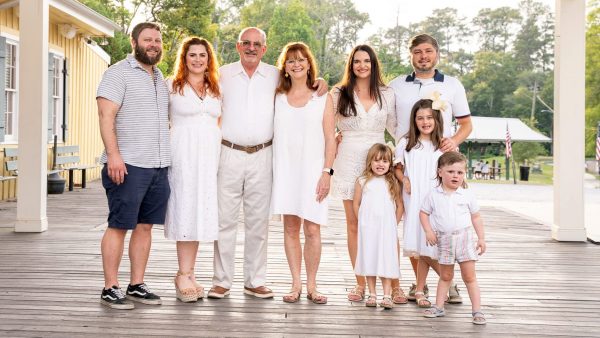
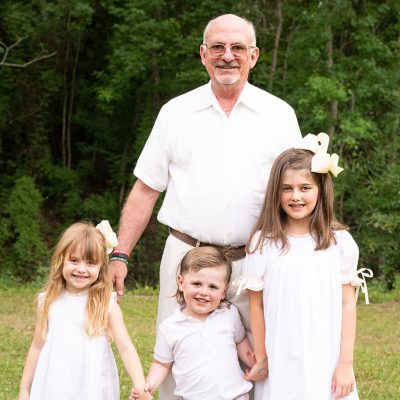
Chink lives in Abita Springs with his wife, Lynne. He is the father of two daughters and a proud grandfather of four. When he is not at the office, he is likely on a golf course or somewhere on the Louisiana coast with a fishing rod. He has been part of the Northshore community for more than thirty years. That familiarity with the people, the parishes, and the courts here is something that takes time to build and cannot be imported.

Practice Areas

What Chink's clients are saying:

I have known Charlton Ogden since he was a boy, and he has always been a very capable, caring, and honest man. I highly recommend him.”
EJ Gamble

Questions And Answers

Estate planning involves determining how an individual’s assets will be preserved, managed, and distributed after death. It also takes into account the lifetime management of an individual’s properties and financial obligations, as well as the management of an individual’s health care in the event of incapacitation. Contrary to what most people believe, this isn’t a tool meant just for the wealthy. Parents and/or grandparents with children and/or grandchildren should have valid estate plans in place. 

A basic estate plan includes (1) a General Power of Attorney – Appointing a trusted person as one’s agent in the event of incapacity to manage an individual’s property rights and business affairs, (2) a Medical Power of Attorney – Appointing a trusted person as one’s agent in the event of incapacity to manage an individual’s health care. (3) Living Will Declaration  – Proclaiming an individual’s desire not to be kept alive by artificial means when it is determined by the treating physicians that the patient’s condition is terminal and life would be prolonged only by the use of such means), and (4) Last Will and Testament – Instructing how an individual’s estate (property of which the decedent dies possessed of) shall be transferred to specific individuals or other legal entities and how the decedent’s estate shall be managed by a trusted person, known as an executor, during the legal process of the succession of the decedent’s estate to those named as legatees under the decedent’s will.

Without Estate Planning, Louisiana law provides for the management and care of an incapacitated individual’s person and property and how and to whom a decedent’s estate must be managed and transferred.  This usually leads to expensive court actions for the appointment of one to care for the incapacitated person or curator, litigation over the management of the decedent’s estate, the appointment of those to care for the decedent’s minor children, if any, and/or the transfer of the estate to the legal heirs, who in some instances are not those to whom the decedent wishes to share in his estate.      

A will is a legal document that outlines how you want your assets to be distributed after your death. It also appoints an executor to manage your estate and carry out your wishes. A trust, on the other hand, is a legal arrangement where a trustee holds and manages assets on behalf of beneficiaries. Trusts can be established during your lifetime or upon your death, as specified in your will. Trusts can offer more flexibility, privacy, and tax benefits compared to a will, but they can also be more complex and expensive to establish and maintain.

Succession is the legal process whereby the assets comprising a decedent’s estate are transferred to the legal heirs in intestate successions (where the decedent died without a valid Last Will and Testament) or to the legatees in testate successions (those persons or entities specifically named in the decedent’s Will to whom the property comprising the decedent’s estate shall be transferred).  In most instances, Successions include the management of a decedent’s estate pending its distribution to the legal heirs by operation of Louisiana law in Intestate Successions or to the legatees in Testate Successions pursuant to a Last Will and Testament.   During the management of a succession, the succession representative shall pay the decedent’s outstanding debts, if any, and succession administration expenses using funds out of and identify and evaluate the assets comprising the decedent’s estate.  This may require the sale of some estate properties to fund the payment of debts and administration expenses.  Thereafter, the succession representative shall petition the court on behalf of the heirs or legatees for a judgment of possession whereby the assets comprising the decedent’s estate shall be transferred to the legal heirs or legatees after accounting for any debts and the administration of the succession.

Property law governs the ownership, use, and transfer of real property (land and buildings) and personal property (movable possessions). Common issues in property law include disputes over property boundaries, easements (rights of way), adverse possession (squatter’s rights), zoning and land use regulations, landlord-tenant disputes, and the sale or transfer of property. An attorney specializing in property law can help you navigate these issues and protect your rights.

A general civil law practice covers a broad range of non-criminal legal matters. Attorneys who practice general civil law may assist clients with issues related to contracts, property, business and corporate law, estate planning, successions, family law, personal injury, and more. These attorneys provide legal advice, draft and review documents, negotiate settlements, and represent clients in court or before administrative agencies. Their primary goal is to resolve disputes and protect their clients’ rights and interests in various civil matters.

A General Power of Attorney is a legal document wherein you appoint a trusted person or persons to act on your behalf in financial and personal matters.  A Medical Power of Attorney is a legal document wherein you appoint a trusted person to act on your behalf in healthcare matters.  These are necessary to help ensure your affairs are managed according to your wishes and by whom you wish to manage those affairs if you become incapacitated or unable to make important decisions yourself.

A Limited Liability Company (LLC) is a legal entity formed by an Organizer or Organizers that combines the advantages of both corporations and partnerships.  It provides personal liability protection to its members from the debts or obligations of the LLC.  An LLC is formed by Articles of Organization and governed by an Operating Agreement, whereby the members of the LLC agree, among other things, on how and by whom the LLC shall be managed, the voting rights of the members, and the transfer of ownership interests to third persons.    

Contact Ogden Law